Latest Articles
View All
You don't need credentials, publication, or a special title to write something meaningful. If you have something worth saying, the writing can begin there.
by Susie A. Taylor
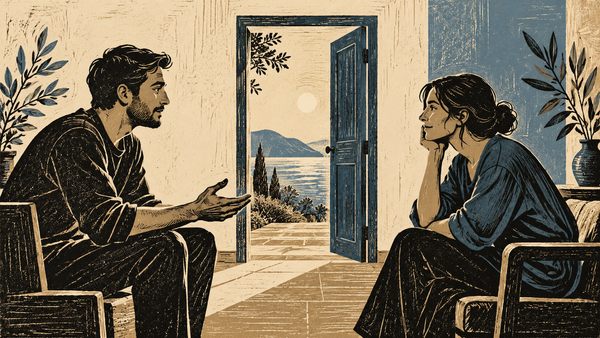

The words we choose can invite understanding or trigger defensiveness. Clear communication does not require harshness, and curiosity can often keep difficult conversations open.
by Susie A. Taylor
From the Statue of Liberty and Black Tuesday to the birth of the internet and the first ISS crew, October 26–November 1 reveals pivotal moments.
by Karalee Greer
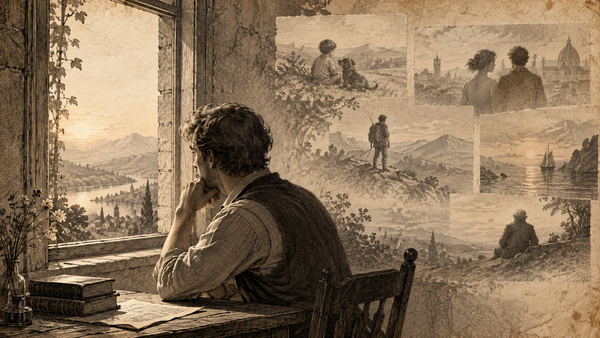
Memory can preserve what happened, but reflection helps us understand what an experience came to mean and how our perspective on it changed over time.
by Susie A. Taylor
Good communication often begins before we choose the words. Identifying the real message beneath the first draft can make conversations and writing clearer, simpler, and more effective.
by Susie A. Taylor
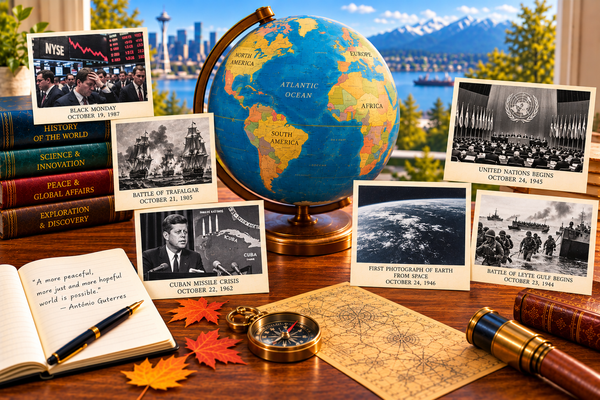
From Black Monday and the Cuban Missile Crisis to the United Nations and Earth's first photograph from space, October 19–25 shaped our world.
by Karalee Greer
The stories we avoid may still carry meaning. Revisiting them thoughtfully, with distance and boundaries, can help us understand what changed without requiring us to share publicly.
by Susie A. Taylor
Writing does more than capture thoughts. It can slow us down, reveal contradictions, and help us discover what we believe before we have fully formed the words.
by Susie A. Taylor
You don't need credentials, publication, or a special title to write something meaningful. If you have something worth saying, the writing can begin there.
by Susie A. Taylor
Good design is not only about appearance. It begins with imagining another person's experience and using thoughtful details to make what they need to do clearer, easier, and more human.
WBN News celebrates publisher, editor, journalist and photographer Elke Porter as she reaches the remarkable milestone of 900 published articles.
Many businesses fail not from a lack of talent, but from running fast in the wrong direction. Stop corporate navel-gazing and adopt Market-Focused Planning to solve real customer problems and win.
Uncertainty is inevitable, but your response is up to you. While global shifts cause many to freeze, effective leaders find clarity, stay disciplined, and quietly take ground. Don't just survive disruption—prepare to lead through it.
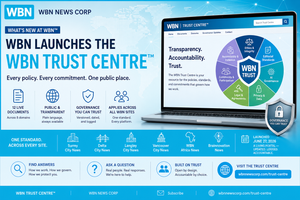
WBN's new Trust Center puts every policy, standard, and commitment that governs how we work — publicly available, in plain language, in one place.
Mastery is rarely dramatic. It develops through consistent practice, small improvements, and the discipline to keep showing up over time.
Many people repeat skills without improving them. Deliberate practice—focused, structured, and intentional—is what actually leads to progress.
Talent may open doors, but practice changes who we become. Repeated effort reshapes our abilities and builds the foundation for long-term mastery.
You don't need credentials, publication, or a special title to write something meaningful. If you have something worth saying, the writing can begin there.
by Susie A. Taylor

The words we choose can invite understanding or trigger defensiveness. Clear communication does not require harshness, and curiosity can often keep difficult conversations open.
by Susie A. Taylor
From the Statue of Liberty and Black Tuesday to the birth of the internet and the first ISS crew, October 26–November 1 reveals pivotal moments.
by Karalee Greer
Memory can preserve what happened, but reflection helps us understand what an experience came to mean and how our perspective on it changed over time.
by Susie A. Taylor
Good communication often begins before we choose the words. Identifying the real message beneath the first draft can make conversations and writing clearer, simpler, and more effective.
by Susie A. Taylor
From Black Monday and the Cuban Missile Crisis to the United Nations and Earth's first photograph from space, October 19–25 shaped our world.
by Karalee Greer
The stories we avoid may still carry meaning. Revisiting them thoughtfully, with distance and boundaries, can help us understand what changed without requiring us to share publicly.
by Susie A. Taylor
Writing does more than capture thoughts. It can slow us down, reveal contradictions, and help us discover what we believe before we have fully formed the words.
by Susie A. Taylor